Connecting
Dots
Creating Impact.
Bayan Alzahabi Marketing & PR




In the hyper-competitive commercial market of the United Arab Emirates, prospective buyers submitting an inbound enquiry expect instantaneous gratification. When a corporate decision-maker or consumer fills out a lead form in Dubai, they are actively engaged in problem-solving and often submitting parallel inquiries to three competing providers. Operating under traditional manual sales response workflows—where leads sit unassigned for hours or days—severely degrades conversion rates, effectively wasting valuable advertising capital.
"The vendor that contacts the prospect first captures the buyer's focus, establishes authority, and very often wins the deal." — BAZ Team
The Mathematics of Lead Decay: The 5-Minute Window
The widely cited Lead Response Management Study by Dr. James Oldroyd (MIT and InsideSales.com, 2007) found that the odds of contacting a lead were 100 times higher when calling within 5 minutes rather than 30 minutes, and the odds of qualifying that lead were 21 times higher.
Every hour of delay makes the conversation harder, and after a day the lead has usually gone cold. In fast-paced GCC business environments, prospects quickly move on to competing priorities or contract with agile competitors who respond immediately.
Understanding this mathematical lead decay curve highlights why optimizing speed to lead is the single highest-leverage improvement a sales director can make.
Why Traditional Manual Sales Response Workflows Fail
In many UAE organizations, inbound leads suffer from administrative lag. Form submissions generate static notification emails sent to generic inboxes, requiring manual triage by sales managers before manual assignment to individual sales reps.
This friction is exacerbated by weekend schedules, after-hours inquiries, and busy sales reps tied up in meetings. By the time a sales executive calls the prospect back, the buyer has forgotten the form details or already scheduled a discovery meeting with a competitor.
Eliminating manual human bottlenecks through automated lead routing and immediate digital engagement is essential to closing the speed gap.

Building an Automated 5-Minute Speed to Lead Engine
Constructing an automated speed to lead architecture requires orchestrating instant triggers across your marketing stack upon form submission.
Step 1: Configure web forms to trigger real-time webhooks directly into your CRM platform. Step 2: Implement automated lead distribution rules, routing prospects based on territory, deal size, or round-robin availability.
Step 3: Simultaneously trigger an instant automated SMS or WhatsApp acknowledgment message to the prospect ('Hi [Name], thanks for reaching out to BAZ. Senior Consultant Sarah is reviewing your inquiry now. What time today works for a quick 5-minute call?').
This automated response engages the buyer immediately while pushing live push notifications directly to the assigned representative's mobile device.
Leveraging AI Voice and Conversational SDRs for Instant Contact
For enterprise organizations receiving hundreds of daily inquiries, deploying conversational AI agents elevates speed to lead to absolute zero-latency execution.
AI conversational agents can initiate automated outbound phone calls or instant WhatsApp text dialogues within 30 seconds of form submission. The AI agent initiates polite, natural dialogue, answers initial questions, verifies buyer intent, and seamlessly transfers qualified calls live to an available sales executive.
This automated immediate contact ensures no lead ever sits uncontacted, regardless of submission time, weekend hours, or surge volume.
Measuring Speed to Lead Benchmarks and Team Accountability
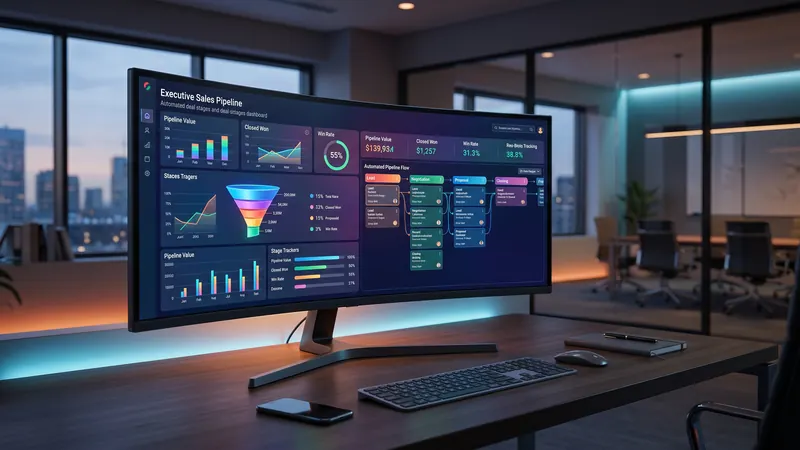
Transforming organizational sales culture requires establishing strict SLAs (Service Level Agreements) and tracking response velocity within central reporting dashboards.
Track core metrics including Average First Contact Time, Lead Qualification Rate by Response Bracket, and Contact Rate by Time Slot. Display live team response leaderboards within your CRM to foster healthy competitive accountability.
Continuously refining automated notification rules and holding sales reps accountable to sub-5-minute response standards creates a high-performance sales organization built for market dominance.
"In modern sales, the fast do not just beat the slow—they absorb them. Prioritize response velocity." — BAZ Team
Key Takeaways
- Contacting inbound leads within 5 minutes instead of 30 dramatically increases the odds of reaching and qualifying them.
- Traditional manual lead assignment creates administrative lag that surrenders high-value deals to agile competitors.
- Automate speed to lead using webhooks, instant CRM routing, and automated SMS/WhatsApp buyer acknowledgments.
- Deploy conversational AI agents to initiate zero-latency outreach 24/7, even during weekends and after-hours.
- Track Average First Contact Time in CRM dashboards and establish strict sub-5-minute sales team SLAs.
Want to automate your inbound lead response and double your sales conversions? Explore BAZ Sales Automation Solutions.