Connecting
Dots
Creating Impact.
Bayan Alzahabi Marketing & PR



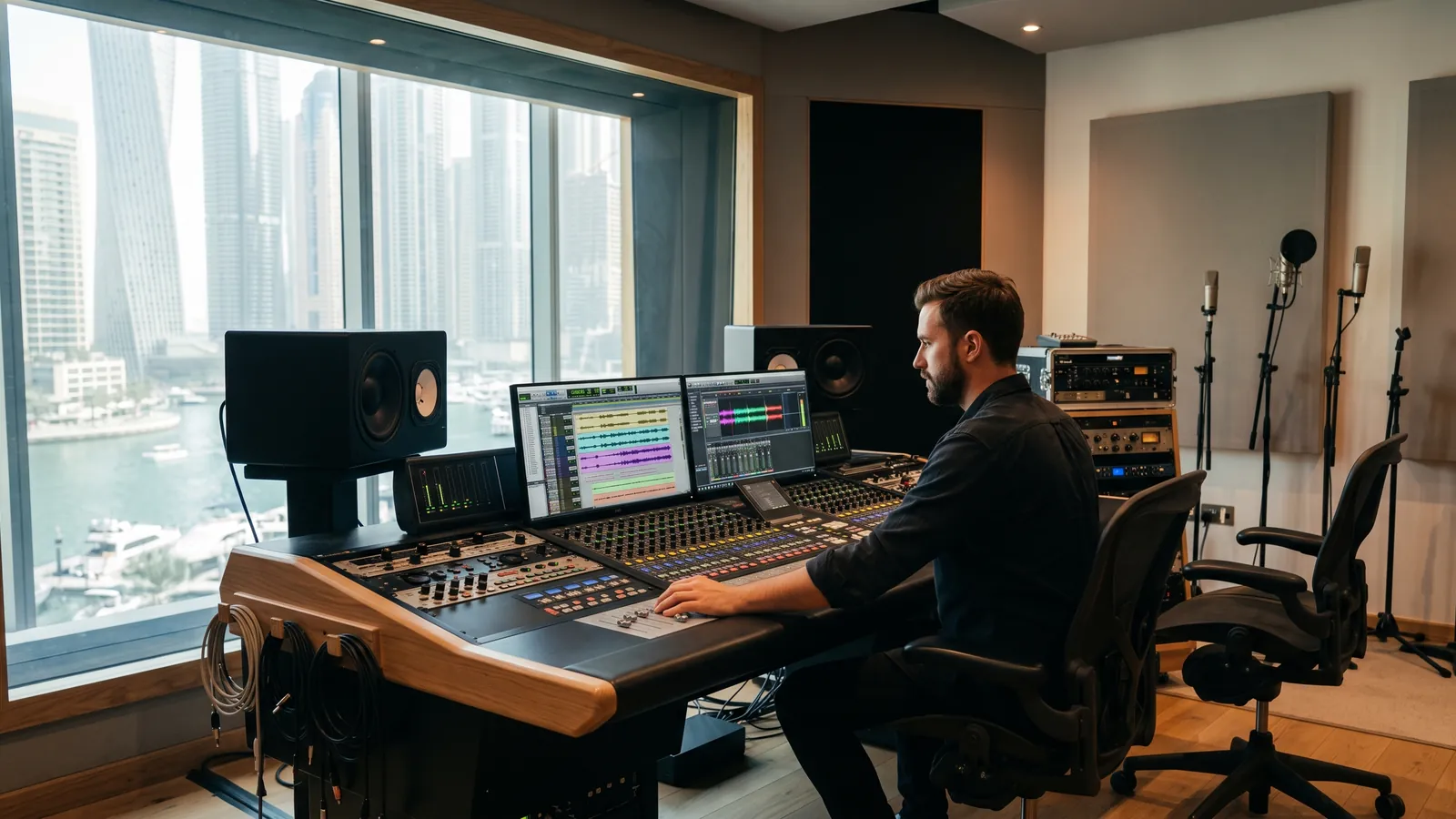
A recognisable voice can connect a campaign across formats and languages. Voice cloning may make certain revisions easier, but it does not remove the need for performance direction, permission, and native language review. Treat synthetic narration as an audio production process with an accountable speaker relationship and a controlled release workflow.
"A voice is part of a person's identity; using it in a campaign requires more than access to a recording." — BAZ Team
Decide whether cloning serves the campaign
Start with the creative requirement. Does the campaign need a consistent narrator across many short variations, or does it depend on a nuanced performance for a single film? A human recording session may be the better choice when emotion, improvisation, or a distinctive dialect is central. Cloning should solve a production problem rather than become the concept by itself.
Compare the complete production effort. Include script preparation, permissions, voice setup, pronunciation testing, editing, mixing, and approval. Generating a short audio file quickly does not establish that the final campaign will be cheaper or faster. Repeated corrections can absorb the apparent saving.
Create a short test script containing the difficult parts of the real campaign. Include brand names, Arabic and English transitions, numbers, and the intended emotional register. Evaluate the result before committing the campaign to a workflow that may not handle those details well.
Agree permissions and platform requirements first
Use a voice you are authorised to use and document the permitted purpose, channels, languages, duration, territories, and approval process. Agree how the voice model may be accessed, whether it may be shared, and what happens when the relationship ends. Have the agreement reviewed for the actual campaign and jurisdiction rather than assuming a generic release covers every synthetic use.
Platform rules can impose additional limits. For example, ElevenLabs' Professional Voice Clone guidance says users cannot create another person's professional clone on their account even with consent; the speaker can create and verify their own clone and share it through the supported process. Check the selected provider's current requirements before production.
Do not clone a public figure, customer, or employee from an available recording and assume publicity or employment creates permission. Keep the speaker's approval attached to the project record. A familiar voice can imply endorsement, so the intended representation needs to be clear as well as technically possible.
Adapt the script for speech in each language
Write for listening rather than reading. Shorten complicated sentences, remove visual references that make no sense in audio, and make the offer understandable without relying on punctuation. Read the script aloud before generating it. Awkward phrasing is usually a script problem before it is a synthesis problem.
Prepare Arabic and English versions from the same approved offer. Preserve prices, conditions, product facts, and calls to action while allowing natural differences in rhythm. Ask a native Arabic writer to choose the appropriate register and check dialect suitability. A literal translation can be grammatically correct while sounding unnatural when spoken.

Create a pronunciation and performance guide
Record how brand names, place names, acronyms, dates, and currencies should sound. Provide approved reference pronunciations where possible. A bilingual campaign may contain a product name in English inside an Arabic sentence; test that transition explicitly rather than assuming the system will handle it consistently.
Specify pace, emphasis, pauses, and emotional intent. A reassuring service message should not sound like a high-energy retail promotion. Generate short passages and compare them with the brief before assembling the entire script. This makes revisions more targeted and reduces the temptation to accept a weak performance because a long file is already complete.
Have native listeners review meaning as well as sound. An incorrectly stressed word or misread number can change the offer. Keep a list of corrections and the final approved pronunciation so later variants do not reintroduce the same error.
Review the audio as a finished advertisement
Listen to the complete mix on the devices and placements that matter. Background music, sound effects, and compression can obscure a line that sounded clear in isolation. Check the opening, the central message, and the call to action at normal listening volume. Do not judge intelligibility only through studio headphones.
Compare the final audio with the approved script line by line. Confirm that no words were omitted, repeated, or changed during generation and editing. If the placement has duration or technical requirements, verify the exported file against the current publisher specifications rather than stretching speech unnaturally to fit.
Review any disclosure obligations with the campaign owner and relevant platform requirements. Even where a particular label is not mandated, the creative should not falsely imply a real testimonial or a statement by someone who did not approve it. Transparency should match what the audience is being asked to believe.
Keep versions and access under control
Store the script, generated takes, final mix, permissions, and approval record together. Label the language, campaign, version, and intended placement. When a price or date changes, identify every audio variant that contains it. Replacing one master file does not necessarily update already scheduled advertisements.
Limit access to the voice model to the people who need it. Establish who may generate new material and who must approve release. The ability to create speech should not automatically grant permission to publish any statement in the speaker's voice.
Evaluate whether the workflow is worth repeating
After the pilot, review correction time, speaker feedback, native language quality, and production costs. Ask whether the system made a real recurring task easier. It may be appropriate for a set of short updates but unsuitable for an emotionally demanding brand film.
When comparing campaign results, keep creative and distribution differences in mind. A change in response cannot automatically be attributed to a cloned voice if the script, audience, or media placement also changed. Use a controlled comparison where feasible and treat production efficiency separately from advertising effectiveness.
"Approve synthetic narration with the same care you would give a recorded spokesperson: the words, performance, and permission all matter." — BAZ Team
Key Takeaways
- Choose cloning only when it fits the creative and production task.
- Document speaker permission and follow the provider's own rules.
- Adapt scripts for natural Arabic and English speech.
- Review pronunciation, meaning, final mix, and placement requirements.
- Control model access and preserve approved campaign versions.
Need bilingual audio that fits your campaign and brand voice? Explore BAZ creative content production.